Few dishes are as universally loved as noodle soup. From the classic chicken version that warms you on a cold day to international favorites like Japanese ramen or Vietnamese pho, this comforting meal transcends cultures and generations. This article is your ultimate guide: exploring its history, global variations, cooking techniques, nutritional benefits, and expert tips for crafting the perfect bowl at home.
The Timeless Appeal of Noodle Soup
Noodle soup is more than just food; it is comfort, tradition, and nourishment in one bowl. Across the world, people turn to noodle soup when they are sick, when they want to celebrate, or when they simply crave something warm and filling. Its versatility makes it a staple in kitchens everywhere.
Why Noodle Soup Matters
Affordable and accessible, this recipe fits any budget. Customization is simple, with endless variations to suit your taste. Preparing large batches takes little effort, making it perfect for gatherings. Plus, it stores and reheats beautifully, which makes it ideal for meal prep.
A Brief History of Noodle Soup
Origins of Noodles
Historians trace noodles back over 4,000 years to China, where millet-based noodles were discovered in archaeological sites. From there, noodles spread across Asia and eventually to Europe and the Middle East.
The Marriage of Noodles and Broth
Soup has existed for millennia, but the combination of noodles and broth became popular in many cultures:
- China: Hand-pulled noodles in rich broths.
- Japan: Ramen, soba, and udon soups.
- Vietnam: Pho, a fragrant beef or chicken noodle soup.
- Italy: Pasta e fagioli and minestrone.
- United States: Chicken noodle soup, often considered a cure for colds.
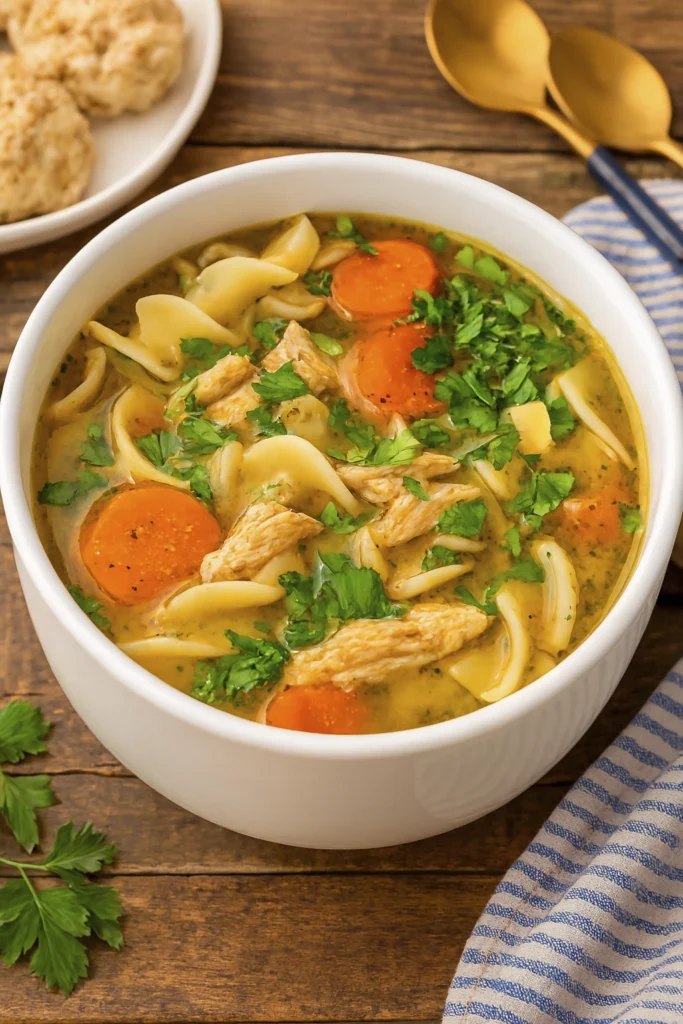
Essential Ingredients for Noodle Soup
The Broth
The foundation of any noodle soup is its broth. It can be:
- Chicken broth: Light, savory, and versatile.
- Beef broth: Rich and hearty.
- Vegetable broth: Perfect for vegetarian or vegan versions.
- Bone broth: Nutrient-dense and deeply flavorful.
The Noodles
Different noodles create different textures:
- Egg noodles: Classic for chicken noodle soup.
- Rice noodles: Common in Asian soups like pho.
- Wheat noodles: Used in ramen and udon.
- Gluten-free noodles: Options for dietary needs.
The Protein
- Chicken (breasts, thighs, or rotisserie).
- Beef (brisket, short ribs).
- Pork (belly, shoulder).
- Seafood (shrimp, fish).
- Plant-based proteins (tofu, tempeh, beans).
Vegetables and Herbs
- Carrots, celery, onions, garlic.
- Leafy greens like spinach or bok choy.
- Fresh herbs: parsley, cilantro, basil, thyme.
How to Make Classic Chicken Noodle Soup
Step 1: Sauté the Vegetables
Cook onions, carrots, celery, and garlic in olive oil until softened.
Step 2: Add Broth and Chicken
Pour in chicken broth and add chicken breasts or thighs. Simmer until the chicken is cooked through.
Step 3: Shred the Chicken
Remove the chicken, shred it with two forks, and return it to the pot.
Step 4: Add Noodles
Stir in egg noodles and cook until al dente.
Step 5: Season and Serve
Add salt, pepper, and fresh herbs. Serve hot with bread or crackers.
Variations of Noodle Soup Around the World
Asian Inspirations
- Japanese Ramen: Rich broth, chewy noodles, toppings like pork belly and soft-boiled eggs.
- Vietnamese Pho: Aromatic broth with rice noodles, beef or chicken, and fresh herbs.
- Thai Tom Yum: Spicy, sour broth with shrimp and rice noodles.
European Classics
- Italian Minestrone: Vegetable-packed soup with pasta.
- Hungarian Goulash Soup: Beef, paprika, and noodles.
American Favorites
- Chicken Noodle Soup: The ultimate comfort food.
- Turkey Noodle Soup: A great way to use holiday leftovers.
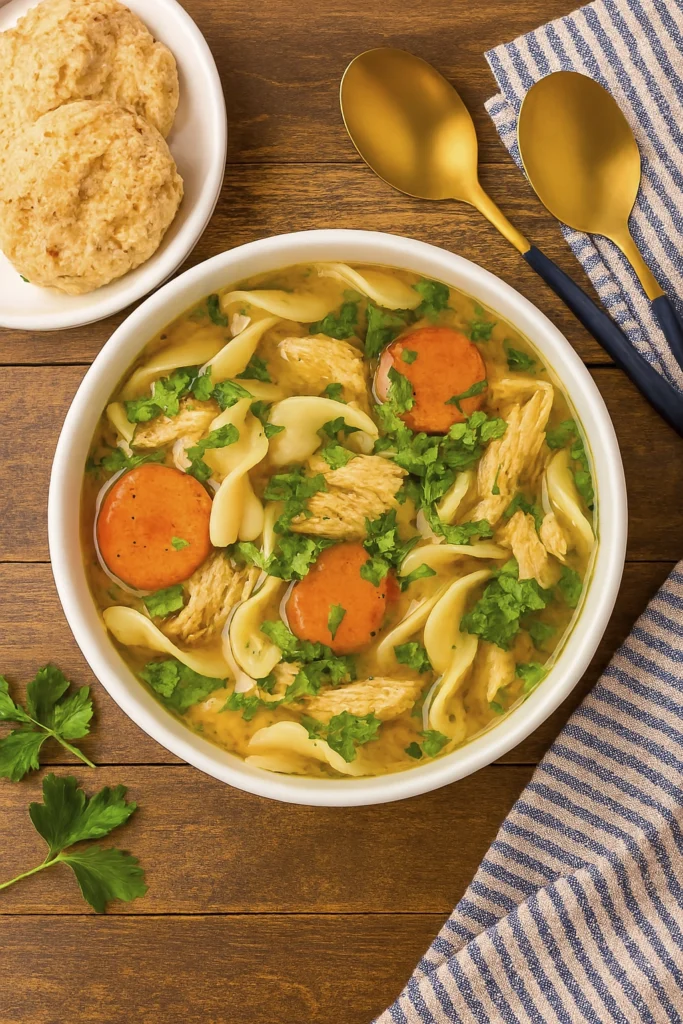
Tips for Perfect Noodle Soup
Cooking the Noodles
Always cook noodles just until al dente. Overcooked noodles become mushy, especially when reheated.
Freezing and Storage
- Store in the fridge for up to 5 days.
- Freeze for up to 3 months, but freeze without noodles for best results.
Flavor Boosters
- Add a splash of lemon juice for brightness.
- Stir in cream for a richer texture.
- Use fresh herbs at the end for maximum flavor.
Nutritional Benefits
Balanced Nutrition
- Protein: From chicken, beef, or plant-based options.
- Carbohydrates: From noodles, providing energy.
- Vitamins and Minerals: From vegetables and herbs.
Healing Properties
It is often recommended when sick because:
- Warm broth soothes the throat.
- Steam helps clear sinuses.
- Nutrients support recovery.
Serving Suggestions
Classic Pairings
- Crusty bread.
- Saltine crackers.
- Grilled cheese sandwiches.
Creative Pairings
- Fresh salads with apples and nuts.
- Roasted vegetables.
- Light rice dishes.
SEO-Optimized FAQ Section
Yes, but freeze without noodles to prevent them from becoming mushy.
Egg noodles are traditional, but rice noodles and ramen noodles are excellent alternatives depending on the recipe.
Add a cornstarch slurry, cream, or blend a portion of the vegetables.
Yes, especially when made with lean protein, fresh vegetables, and low-sodium broth.
Related recipes
How to Make Glazed Maple Shortbread Cookies (Step-by-Step Recipe)
Irresistible Thanksgiving Cookies: The Ultimate Guide to Festive Baking
Print
Noodle Soup: The Complete Guide to Comfort in a Bowl
- Total Time: 35 minutes
- Yield: 4 servings
Description
Few dishes are as universally loved as noodle soup. From the classic chicken noodle soup that warms you on a cold day to international variations like Japanese ramen or Vietnamese pho, noodle soup is a dish that transcends cultures and generations. This article is your ultimate guide to noodle soup — its history, variations, cooking methods, nutritional value, and tips for making the perfect bowl at home.
Ingredients
– 8 cups chicken broth (or vegetable broth) – 2 cups cooked chicken, shredded – 2 cups egg noodles – 2 carrots, sliced – 2 celery stalks, sliced – 1 onion, diced – 2 cloves garlic, minced – 2 tbsp olive oil – Salt and pepper to taste – Fresh parsley for garnish
Instructions
1. **Sauté the Vegetables** — Cook onions, carrots, celery, and garlic in olive oil until softened. 2. **Add Broth and Chicken** — Pour in chicken broth and add chicken. Simmer until cooked through. 3. **Shred the Chicken** — Remove, shred, and return it to the pot. 4. **Add Noodles** — Stir in noodles and cook until al dente. 5. **Season and Serve** — Add salt, pepper, and fresh herbs. Serve hot with bread or crackers.
Notes
**Tips for Perfect Noodle Soup** – Cook noodles just until al dente to prevent mushiness. – Store in the fridge for up to 5 days or freeze (without noodles) for up to 3 months. – Add lemon juice for brightness or cream for a richer broth. **Variations Around the World** – *Japanese Ramen*: Rich broth, chewy noodles, pork belly. – *Vietnamese Pho*: Aromatic broth, rice noodles, fresh herbs. – *Italian Minestrone*: Vegetable-packed soup with pasta.
- Prep Time: 10 minutes
- Cook Time: 25 minutes
Nutrition
- Calories: 250
Conclusion
Noodle soup is more than just a meal — it’s a tradition, a comfort, and a versatile dish that adapts to every culture and taste. Whether you enjoy a classic chicken version, a spicy Thai creation, or a fragrant Vietnamese pho, the possibilities are endless. With the right ingredients, techniques, and creativity, you can make it a staple in your kitchen that nourishes both body and soul.
Find more cozy dessert ideas on our Pinterest—caramel, apple, and fall flavors await!