Crockpot Jambalaya, One-Pan Dinners are the perfect solution for busy home cooks who want bold Creole flavors without the hassle of multiple pots and pans. This Louisiana-inspired dish combines chicken, sausage, shrimp, rice, and vegetables into a slow-cooked meal that is hearty, convenient, and ideal for family gatherings or weeknight comfort food.
What Makes Jambalaya Unique
Jambalaya is often compared to gumbo, but the two dishes differ in important ways. Gumbo relies on a roux and serves rice separately, while jambalaya integrates rice directly into the dish. In the crockpot version, rice is cooked separately to avoid overcooking, then added at the end or served underneath the stew-like mixture. This distinction highlights jambalaya’s identity as a one-pan dinner that balances proteins, vegetables, and grains in a single dish.
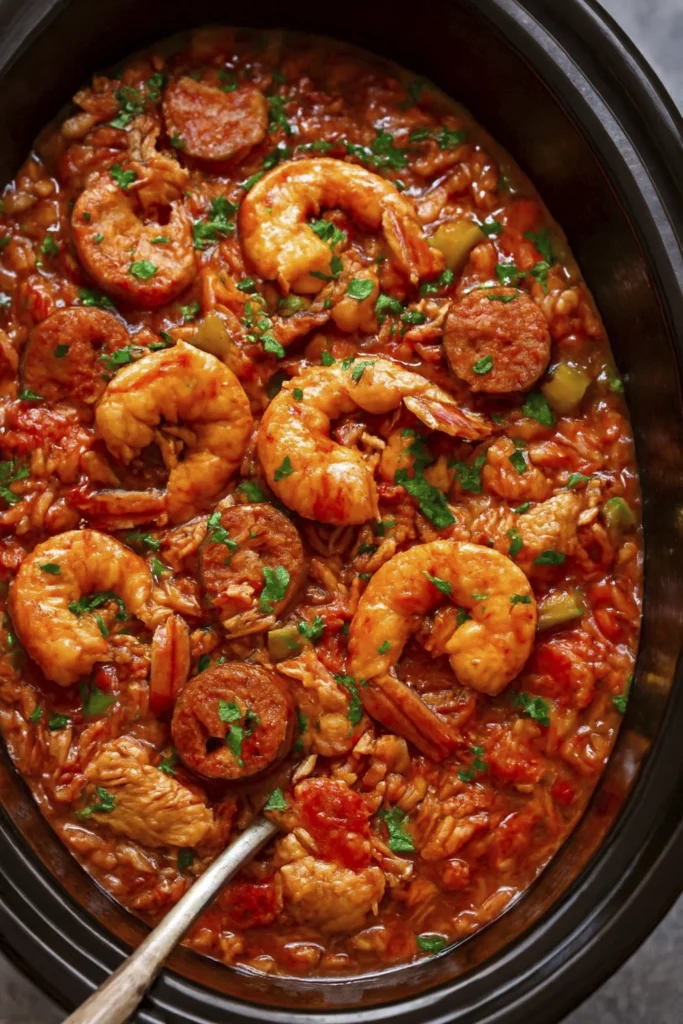
The Role of Creole Seasoning
Creole seasoning is the backbone of jambalaya. It blends paprika, garlic powder, onion powder, oregano, thyme, basil, and black pepper into a mix that delivers depth and warmth. While store-bought options like Tony Chachere’s are popular, many home cooks prefer making their own blend to control salt levels and flavor intensity. This seasoning not only enhances the proteins but also ties together the vegetables and rice, ensuring every bite is layered with complexity.
The Holy Trinity of Vegetables
No Creole dish is complete without the holy trinity of onion, bell pepper, and celery. These vegetables form the aromatic base of jambalaya, releasing flavor as they cook slowly in the crockpot. Their combination creates a savory foundation that complements the smokiness of sausage and the sweetness of shrimp. By sautéing them briefly before adding to the slow cooker, you deepen their flavor and ensure they hold their texture during long cooking times.
Choosing the Right Proteins
Traditional jambalaya includes chicken, sausage, and shrimp. Each protein contributes a distinct flavor profile:
- Chicken provides a mild, hearty base.
- Sausage, often andouille, adds smokiness and spice.
- Shrimp introduces sweetness and a delicate texture.
Cooking these proteins in stages is essential. Chicken and sausage can withstand long cooking times, while shrimp should be added near the end to avoid becoming rubbery. Keeping shrimp shell-on during cooking enhances flavor and prevents overcooking.
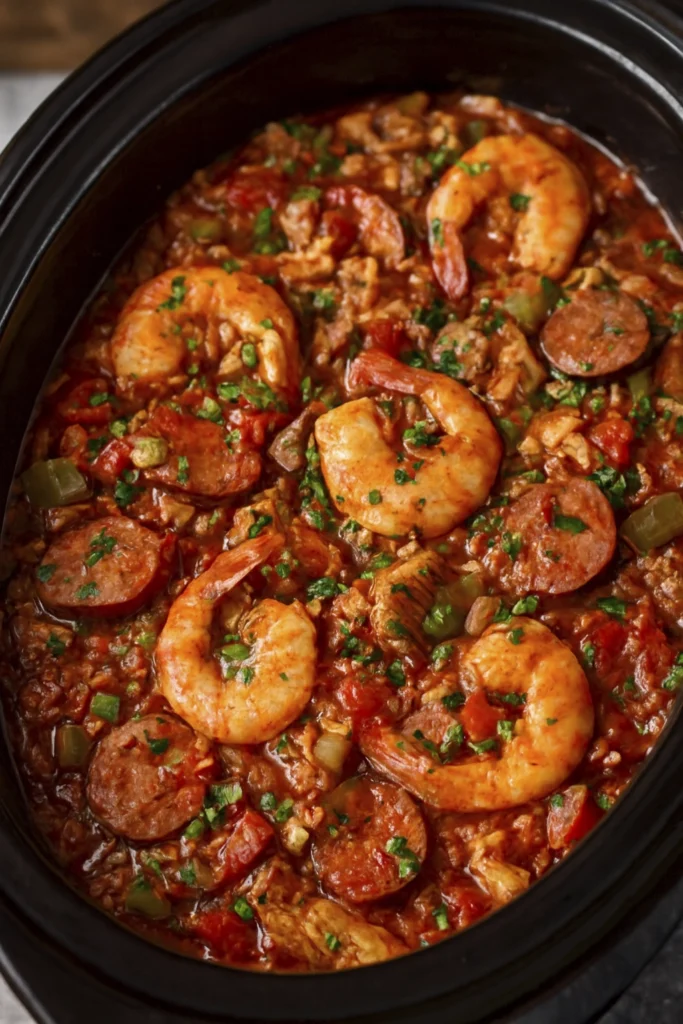
Two-Stage Cooking Process
The crockpot method relies on a two-stage process:
- Stage One: Combine chicken, sausage, vegetables, tomatoes, and seasoning. Cook for 3–4 hours on high or 6 hours on low.
- Stage Two: Add shrimp and cook for 30–45 minutes until tender.
This approach ensures that each ingredient retains its integrity while blending into a cohesive dish. The slow cooker’s gentle heat allows flavors to meld without risk of burning or drying out.
Rice Preparation
Rice is a critical component of jambalaya, but cooking it in the crockpot often leads to mushiness. The best method is to prepare rice separately and serve jambalaya over it or stir it in just before serving. Long-grain rice works best, as it maintains structure and absorbs the sauce without clumping. This technique preserves the balance between proteins, vegetables, and grains.
Serving Suggestions
Jambalaya is traditionally garnished with fresh parsley, which adds color and brightness. It can be served as a standalone dish or paired with sides such as cornbread, collard greens, or roasted vegetables. For gatherings, jambalaya works well as a centerpiece dish, offering a hearty option that satisfies diverse tastes.
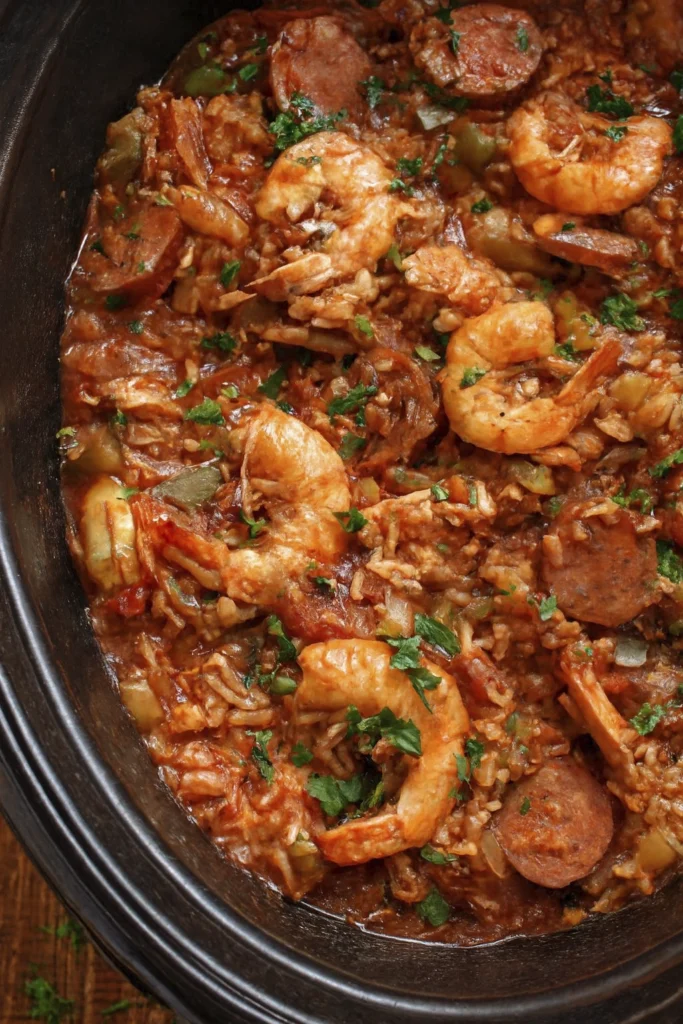
Storage and Leftovers
Crockpot jambalaya stores well in the refrigerator for 2–3 days. However, it is not ideal for freezing, as shrimp texture deteriorates when thawed. To reheat, warm gently on the stovetop, adding a splash of broth or water to restore moisture. Leftovers can be repurposed into wraps, stuffed peppers, or even breakfast hash with eggs.
Nutritional Profile
A serving of crockpot jambalaya provides approximately 369 calories, 19 grams of fat, 14 grams of carbohydrates, and 34 grams of protein. This balance makes it a satisfying meal that delivers energy and sustenance without being overly heavy. By adjusting seasoning and portion sizes, you can tailor the dish to fit dietary preferences.
Why Crockpot Jambalaya Fits the One-Pan Dinner Trend
One-pan dinners are increasingly popular for their simplicity and efficiency. Crockpot jambalaya embodies this trend by combining multiple food groups into a single dish. It reduces cleanup, maximizes flavor, and offers versatility for different occasions. Whether you are cooking for family, entertaining guests, or meal prepping, jambalaya delivers convenience and satisfaction.
Variations of Crockpot Jambalaya
Jambalaya is highly adaptable. Consider these variations:
- Vegetarian Jambalaya: Replace proteins with beans, mushrooms, or tofu.
- Spicy Jambalaya: Increase cayenne pepper or add hot sauce.
- Seafood Jambalaya: Use crab, crawfish, or scallops alongside shrimp.
- Healthy Jambalaya: Substitute brown rice or quinoa for added fiber.
These variations allow you to personalize the dish while maintaining its Creole essence.
Step-by-Step Guide to Crockpot Jambalaya
- Prepare vegetables: chop onion, bell pepper, and celery.
- Slice sausage and cube chicken.
- Sauté vegetables briefly for enhanced flavor.
- Place chicken, sausage, vegetables, tomatoes, and seasoning in crockpot.
- Cook for 3–4 hours on high or 6 hours on low.
- Add shrimp during the final 30–45 minutes.
- Cook rice separately and serve jambalaya over it.
- Garnish with parsley and enjoy.
Related recipes for Crockpot Jambalaya One-Pan
To enrich your cooking journey, explore related recipes within the same site:
- Discover seasonal flavors in pumpkin wild rice soup.
- Try a sweet and savory twist with apple cider glazed chicken.
These internal links provide readers with natural pathways to explore more one-pan dinners and complementary dishes.
The Cultural Significance of Jambalaya
Jambalaya is deeply rooted in Louisiana’s culinary history, blending French, Spanish, and African influences. It reflects the region’s diversity and adaptability, evolving through generations while maintaining its core identity. Preparing jambalaya in a crockpot honors tradition while embracing modern convenience, making it accessible to home cooks worldwide.
Tips for Perfect Crockpot Jambalaya
- Use fresh shrimp for best texture.
- Avoid overcooking rice by preparing it separately.
- Adjust seasoning gradually to suit taste preferences.
- Stir gently when adding shrimp to prevent breaking.
- Garnish just before serving for maximum freshness.
Crockpot Jambalaya: The Ultimate One-Pan Dinner
Description
Crockpot Jambalaya is a comforting Louisiana classic made easy in the slow cooker. Chicken, sausage, shrimp, and Creole-seasoned vegetables simmer together for bold flavor with minimal effort. Serve over fluffy rice for the ultimate one-pan dinner.
Ingredients
- 1 lb boneless skinless chicken breasts, cubed
- 12 oz andouille sausage, sliced
- 1 lb shrimp, peeled and deveined
- 1 onion, diced
- 1 green bell pepper, diced
- 2 celery stalks, chopped
- 3 cloves garlic, minced
- 1 (14.5 oz) can diced tomatoes
- 2 cups chicken broth
- 2 tablespoons Creole seasoning
- 1 teaspoon smoked paprika
- ½ teaspoon thyme
- Salt and black pepper, to taste
- 2 cups cooked long-grain rice (for serving)
- Fresh parsley, for garnish
Instructions
- Lightly sauté onion, bell pepper, celery, and garlic until fragrant.
- Add vegetables to the crockpot along with chicken, sausage, tomatoes, broth, and seasonings.
- Cover and cook on LOW for 6 hours or HIGH for 3–4 hours.
- Add shrimp during the final 30–45 minutes of cooking.
- Cook until shrimp are pink and tender.
- Serve hot over cooked rice and garnish with parsley.
Notes
For best texture, cook rice separately and add just before serving. Adjust spice level with cayenne or hot sauce.
Conclusion
Crockpot Jambalaya is the ultimate one-pan dinner, combining tradition, flavor, and convenience. With its rich Creole seasoning, balanced proteins, and adaptable variations, it stands out as a dish that satisfies both cultural heritage and modern lifestyles. By following the two-stage cooking process and serving rice separately, you ensure a perfect balance of textures and flavors. Whether enjoyed as a family meal or shared at gatherings, crockpot jambalaya delivers comfort and authenticity in every bite.
If you’re craving more inspiration, you’ll find plenty of recipes in the Pinterest